
HEALTH MATTERS – Bladder Stones
I’ve been meaning to write a piece on bladder stones for a while as my male dog had an issue when he was only a year old (now 7-years old). Luckily we managed to control my dog’s condition with a special urinary diet and there was no need for surgery. However, I know of some Bolognese who have been seriously ill and needed complex surgery.
Although this condition is not recognized as hereditary, some breeds are more prone including Dalmatians, Miniature Schnauzers, Bulldogs & Bichon Frise. As an ex veterinary nurse, I often saw bladder stones in dogs and witnessed surgery to remove them. I was well aware that bladder stones can block the bladder and cause a medical emergency.
My Experience
At a year old, my male dog started urinating frequently with dark urine. I went to the vet straight away. After some investigation and lab work, we knew he had bladder stones, but failed to identify the kind without surgery.
Dogs can develop several different kinds of bladder stones. In my dogs case, antibiotics seemed to control things for a short time, but the problem came straight back. We decided to treat him for the most likely kind of bladder stones and started him on a prescription URINARY diet under supervision of my vet. Luckily we managed to control the condition with diet alone, I’m guessing because he was young and the stones hadn’t had a chance to get too big. I’ve kept him on the same urinary diet ever since and thank goodness all has been good with no urinary issues.
What to Look Out For
If you see frequent urination of small amounts, blood in the urine, painful urination, these are typical signs and you should get straight to the vet. Your dog could also be generally unwell, depressed and off their food.
What Are Bladder Stones?
Hard solid mineral formations develop in the bladder, they can vary in size from small granules to larger stones which can cause a total blockage with no urine able to pass. These minerals originally come from the dog’s food with normal urine containing calcium, phosphorus, magnesium, chloride and sodium. Sometimes these minerals trigger increased crystal formation from minerals in the urine. Urinary infections can raise salt levels in the urine promoting crystal formation. Certain diets can predispose dogs to stone formation as can insufficient water intake and concentrated urine. Some breeds are more prone to developing bladder stones which can take anything from a few weeks to months to form.
Diagnosis
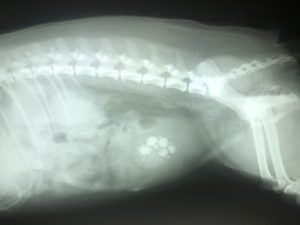
If this happens, your vet is likely to test the urine with a dipstick looking for cells and crystals under the microscope. With smaller dogs, a vet may be able to feel larger stones in the bladder. Some stones may show up with standard X-rays, others with ultrasound.
Treatment
Diets or medication that alter the acidity and chemical make-up a dog’s urine can dissolve some stones. Small stones may be flushed out via a catheter under anesthetic. Large stones that are causing a blockage may need to be removed with an abdominal operation, opening up the bladder and removing the stones. Antibiotics may also be required. There is also the chance of breaking up bladder stones using laser, but this is quite specialized and is not always a suitable option.
To Summarize
I cannot stress firmly enough, if your dog has a problem urinating, you must seek veterinary advice as soon as possible and discuss the possibility of bladder stones if not discussed. In some cases dietary management alone can resolve the issue, but be aware how serious things can become.
